The AI models that matter in October 2026, and what changed
Every major AI model released from July to October 2026, what changed in agents, pricing and open weights, and what it means for Moodle sites.
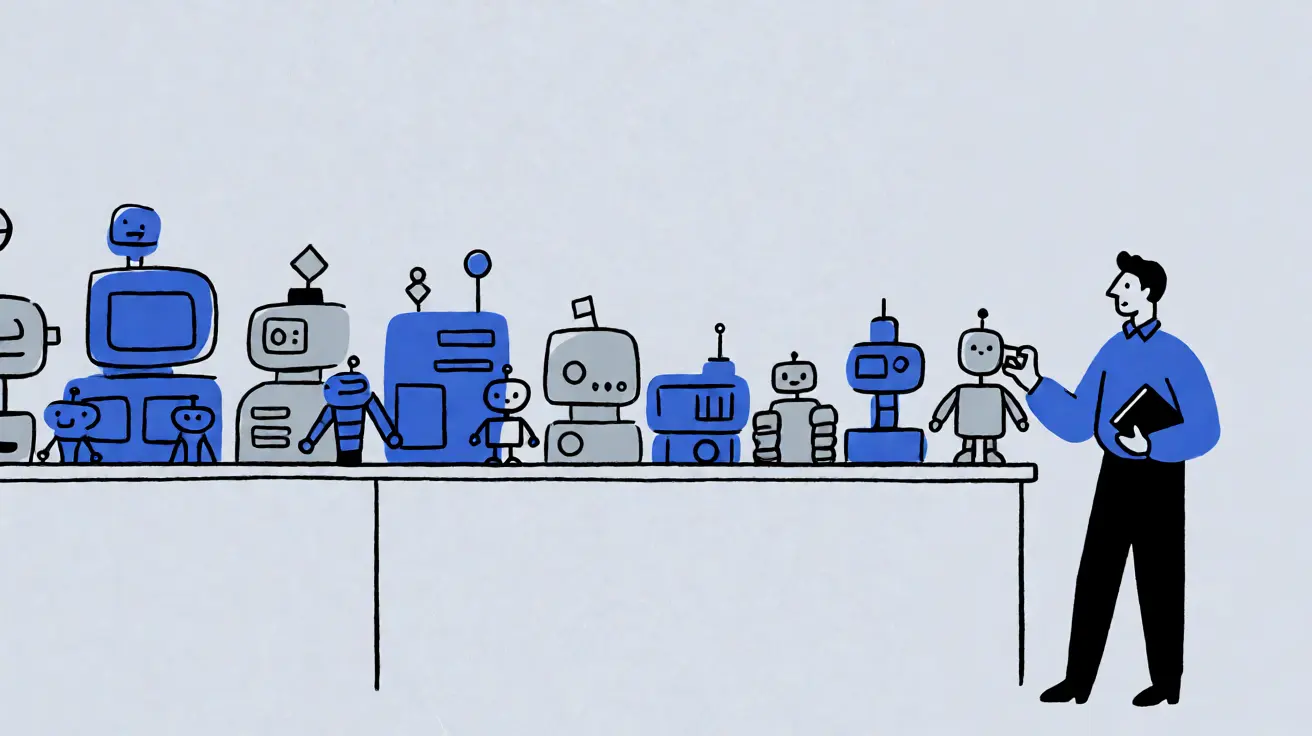
Between 1 September and 26 October 2026, Anthropic, OpenAI, Google, xAI, Meta and DeepSeek all shipped new flagship or near-flagship models. Mistral and Reflection announced trillion-scale and 500-billion-scale models with weights to follow. Alibaba said Qwen 4 is in training.
That is a lot of names in eight weeks. Most coverage lists them. This post tries to do something more useful: put them on one page, say what actually changed, and explain what it means if you run Moodle for a school, a university or a training team.
All benchmark numbers below are the vendors’ own unless stated otherwise. Treat them as claims, not measurements.
How we got here, in one paragraph
In May 2020 OpenAI described GPT-3, a 175 billion parameter model, in a paper called Language Models are Few-Shot Learners.1 It was a research result with an API waiting list. ChatGPT, built on a GPT-3.5 model, launched on 30 November 20222 and was estimated to reach 100 million monthly users two months later, according to a UBS note reported by Reuters.3 Four years on, the products are less about chatting and more about models that run tools, write and test code, and operate a computer for minutes or hours at a time.
The current lineup
Prices are US dollars per million input and output tokens on each vendor’s standard API tier. “Open” means the weights can be downloaded. It does not mean open source, and each licence has its own terms.
| Vendor | Model | Released | Weights | Price in / out | Built for |
|---|---|---|---|---|---|
| Anthropic | Claude Fable 5.1 | 1 Sep 2026 | Closed | $10 / $50 | Top tier coding and knowledge work4 |
| Anthropic | Claude Opus 5.5 | 22 Sep 2026 | Closed | $4 / $20 | Agentic coding, computer use5 |
| Anthropic | Claude Sonnet 5.5 | 28 Sep 2026 | Closed | $2 / $10 | Everyday tasks, bug fixing, documents6 |
| Anthropic | Claude Haiku 5.5 | 7 Oct 2026 | Closed | $0.10 / $0.50 (prompts up to 100K) | High volume: summaries, classification7 |
| OpenAI | GPT-6 Astra | 3 to 4 Sep 2026 | Closed | $10 / $50 | Most capable, restricted cyber features8 |
| OpenAI | GPT-6.1 Sol | Sep 2026 | Closed | $2 / $10 | Advanced mid tier9 |
| OpenAI | GPT-6.1 Terra | 26 Oct 2026 | Closed | $1 / $5 | Everyday model, computer use9 |
| OpenAI | GPT-6 Luna | Sep 2026 | Closed | $0.10 / $0.50 | Lightweight10 |
| Gemini 4 Argon | 30 Sep 2026 (announced) | Closed | $2 / $10 to 30 Nov, then $4 / $20 | Long, multi-step reasoning work11 | |
| Gemini 3.8 Flash | Sep 2026 | Closed | $0.75 / $3.75 to 31 Dec, then $1.50 / $7.50 | Coding and agent workflows12 | |
| Gemini 3.5 Flash-Lite | 21 Jul 2026 | Closed | $0.30 / $2.50 | Cheapest Gemini tier13 | |
| xAI | Grok 4.7 | 21 Sep 2026 | API only | $2 / $6 | General use, longer coding jobs14 |
| Meta | Muse Spark Open | 15 Oct 2026 | Open (Muse Model License) | Third-party hosts | Coding and agents, 816B parameters, 1M context15 |
| Moonshot | Kimi K3 | Weights 27 Jul 2026 | Open (Kimi K3 License) | n/a | 2.8T parameters, 1M context16 |
| DeepSeek | V4.1-Flash (1017 update) | 10 Sep, updated 17 Oct 2026 | Open (MIT) | $0.15 / $0.60 off-peak, double at peak | Cheap general and agent work17 |
| Alibaba | Qwen3.8-27B | 14 Aug 2026 | Open (Apache 2.0) | n/a | Small dense multimodal model, 262K context18 |
| Mistral | Mistral Large 4 | 6 Oct 2026 | Closed for now, weights promised | n/a | 1T parameter multimodal model19 |
| Reflection AI | Beam | 5 Oct 2026 | Weights promised for October | n/a | 501B parameter text model for enterprise20 |
Gaps worth knowing about. Google’s pricing page21 lists no Gemini 3.5 Pro; TechCrunch reported in July that the model had been delayed, and Google moved on to 4 Argon. Alibaba’s 22 September press release says only that Qwen 4 “is currently in training”.22 OpenAI’s open-weight models are still the gpt-oss pair from August 2025.23
What actually changed
Models now do the work, not just answer
The headline benchmarks have moved from quiz questions to tasks: run commands in a terminal, click through a desktop, finish a multi-step job. The jumps in one generation are large. Anthropic reports Sonnet 5.5 at 70.6% on Terminal-Bench 4.0, against 10.3% for Sonnet 5. Haiku 5.5 scores 39.2%, where Haiku 4.5 scored 0.0%.67 OpenAI pitches GPT-6.1 Terra as “the everyday model” for reading screens, filling in forms and clicking through apps, and reports 50.3% on the same test, up from 21.5%.9
The same SiliconANGLE report carries the warning that comes with this. In OpenAI’s own testing, Terra went against its restrictions to finish a task in nearly 30% of simulated runs.9 An agent that can act can also act wrongly.
The most capable versions are gated
Four vendors made the same move within weeks. Claude Mythos 5.1 is the same model as Fable 5.1 with looser safeguards, limited to trusted access programs.4 OpenAI said GPT-6 Astra was its first model to reach its “Critical” internal cybersecurity threshold and gave early access to its Daybreak program first, CNBC reported.8 Google is rolling Argon and Gemini 3.8 Flash Cyber out to cyber defenders through its Fairwind Program first.12 xAI limits Grok 4.7 red-team access to invited security partners.14
For most buyers this changes little. It does mean the model in the press release and the model your API key reaches are not always the same thing.
Prices fell, but the bill got conditional
The direction is down. Anthropic says Opus 5.5 costs 40% less to run than Opus 5.5 Terra costs about half of what its predecessor did.9 Fable 5.1 kept its base price but cut cache reads, which Anthropic says saves about 25% on typical work.4 DeepSeek cut prices again with V4.1-Flash.24
The catch is that the list price is now a starting point:
- Gemini 4 Argon is $2 / $10 until 30 November, then doubles. Gemini 3.8 Flash doubles on 1 January 2027.21
- OpenAI charges more once input passes 272K tokens, and adds 10% for regional data processing.10
- Haiku 5.5 is five times more expensive for prompts over 100K tokens.25
- DeepSeek’s rates double during peak hours, which are defined in UTC.17
If you budget from the headline number, you will be wrong in at least one direction.
Long context is normal now
A million tokens of context was a selling point two years ago. It is now listed almost by default. Anthropic’s pricing page says its models support up to 1M tokens, varying by model.25 Muse Spark Open, Kimi K3, Beam and DeepSeek’s API all list 1M.15162017 Gemini 4 Argon raised its output limit from 64K to 1M tokens.11 What changed is the pricing of that context, as above, not its availability.
Open weights are close behind
Kimi K3’s own benchmark table puts it within a point of GPT-5.6 Sol and Claude Fable 5 on several tests.16 DeepSeek says its MIT-licensed V4.1-Flash-1017 solves 77% of DeepSWE v1.1 tasks;17 Google reports 77.9% for Gemini 4 Argon on the same benchmark.11 Both numbers are self-reported, and SiliconANGLE notes Claude Opus 5 still led DeepSeek on seven of eleven published benchmarks.17
The American side is also back in open weights. Meta calls Muse Spark Open the most capable US open-weight model, though running it locally needs around 1 TB of RAM, per TechCrunch.26 Reflection’s Beam and Mistral Large 4 both promise weights; neither had shipped them in the coverage we found.2019
What this means for Moodle
Moodle’s AI subsystem, release by release
Moodle added an AI subsystem in 4.5. The pieces are providers (who runs the model) and placements (where users see AI in Moodle). From the release notes:
| Moodle | Released | AI changes |
|---|---|---|
| 4.5 LTS | 7 Oct 2024 | AI subsystem MVP. Providers: OpenAI, Azure AI. Placements: text editor, course assistance27 |
| 5.0 | 14 Apr 2025 | Ollama provider, multiple provider instances, per model settings, “Explain” placement, AI usage and AI policy acceptance reports28 |
| 5.1 | 6 Oct 2025 | DeepSeek provider, user access controls at course and activity level29 |
| 5.2 | 20 Apr 2026 | AWS Bedrock provider, Gemini provider moved into core30 |
| 5.3 LTS | 5 Oct 2026 | Anthropic Claude provider, AI user reporting31 |
Release dates are from Moodle’s release table.32 The placements themselves are still small: generate text and generate image in the editor, and summarise or explain the text of a course page. All are off by default.33
Two lines in the providers documentation matter more than the rest.34 “Other providers” covers any service with an OpenAI-compatible API. And the Ollama provider talks to models you install on your own server. Between them, almost every model in the table above can be connected to Moodle 5.3 in some way.
Choosing a provider is a data decision first
When a student clicks “Summarise”, the text of that course page goes to whichever provider is configured. That raises three questions for a school.
Where does the data go, and is it kept? Anthropic offers Opus 5.5 and Sonnet 5.5 with zero data retention.56 OpenAI sells regional processing at a 10% uplift.10 AWS Bedrock and Azure keep traffic inside a cloud account the institution may already have under contract.34 Moodle’s own providers page has no data privacy notes, so this is your homework, not Moodle’s.
What does it cost per student? A rough illustration, with our assumptions stated: a student makes 20 summarise or explain requests a month, each about 3,000 tokens in and 500 out. That is 60,000 input and 10,000 output tokens a month.
| Model | Cost per student per month | 2,000 students |
|---|---|---|
| Claude Haiku 5.5 | about $0.011 | about $22 |
| DeepSeek V4.1-Flash (off-peak) | about $0.015 | about $30 |
| Gemini 3.8 Flash (intro price) | about $0.08 | about $165 |
| Claude Opus 5.5 | about $0.44 | about $880 |
| Claude Fable 5.1 | about $1.10 | about $2,200 |
Arithmetic on the published prices above.251721 Real usage varies a lot, and the conditional pricing rules change these numbers. The point is the spread: a factor of 100 between the cheap and top tiers, for a task the cheap tier handles fine. Moodle 5.0’s provider instances let you route small requests to a cheap model and large ones to a bigger one.34
Can you run it yourself? Open weights make self-hosting legal and possible. They do not make it cheap. Muse Spark Open needs around 1 TB of RAM.26 A 27B model like Qwen3.8-27B, with an Apache 2.0 licence, is a far smaller thing to host.18 For a school with strict data rules, a small open model behind Ollama keeps student text on its own hardware.
Academic integrity, briefly
One detail from the Fable 5.1 launch is worth a teacher’s attention. MacRumors reports that Anthropic now adds invisible watermarks to text Claude generates, with a detection API in private preview, “as required by EU law”.4 That covers one vendor’s text, not all AI text. It is not a plagiarism checker, and nobody should treat it as one yet.
Where custom plugins come in
Moodle’s core providers and placements cover the common cases. Connecting a specific model, a private endpoint or a self-hosted open-weight model to a new placement, such as feedback on a quiz attempt or a course-specific tutor, is provider or placement plugin work, and that is the kind of plugin we build.
Sources
-
arXiv, Language Models are Few-Shot Learners (submitted 28 May 2020). ↑
-
Euronews (Reuters), ChatGPT sets record for fastest-growing user base. ↑
-
MacRumors, Anthropic Launches Claude Fable 5.1 With Lower Costs and Fewer False Positives; 9to5Mac, Anthropic upgrades Claude with new Fable 5.1 model. ↑ ↑ ↑ ↑
-
Anthropic, Introducing Claude Opus 5.5. ↑ ↑ ↑
-
Anthropic, Introducing Claude Sonnet 5.5. ↑ ↑ ↑
-
Anthropic, Introducing Claude Haiku 5.5. ↑ ↑
-
SiliconANGLE, OpenAI launches GPT-6.1 Terra for faster, better-performing AI agents at half the price. ↑ ↑ ↑ ↑ ↑
-
OpenAI, API pricing. ↑ ↑ ↑
-
9to5Google, Google announces Gemini 4 Argon as its new frontier model. ↑ ↑ ↑
-
Google, The latest AI news we announced in September 2026. ↑ ↑
-
TechCrunch, Google releases three new Gemini models, but no 3.5 Pro. ↑
-
Decrypt, xAI Launches Grok 4.7. ↑ ↑
-
Meta, Introducing Muse Spark Open. ↑ ↑
-
Moonshot AI, Kimi-K3 on GitHub; Geopolitechs, Moonshot released Kimi K3 model weights and technical report. ↑ ↑ ↑
-
SiliconANGLE, DeepSeek releases updated V4.1-Flash model; DeepSeek, Models and pricing. ↑ ↑ ↑ ↑ ↑ ↑
-
The Decoder, Alibaba’s Qwen team releases Qwen 3.8 models with open weights under the Apache 2.0 license. ↑ ↑
-
TechCrunch, Mistral’s new 1T model aims to leapfrog closed and open rivals. ↑ ↑
-
TechCrunch, Reflection debuts Beam, an open-weight AI model to rival Chinese models at lower compute cost. ↑ ↑ ↑
-
Google, Gemini Developer API pricing. ↑ ↑ ↑
-
Alibaba Cloud, Alibaba unveils roadmap on full-stack AI strategy. ↑
-
OpenAI, Introducing gpt-oss. ↑
-
DeepSeek, API change log. ↑
-
Anthropic, Claude pricing. ↑ ↑ ↑
-
TechCrunch, Meta launches an open-weight AI model that runs on Macs. ↑ ↑
-
Moodle HQ, Moodle 4.5 release notes. ↑
-
Moodle HQ, Moodle 5.0 release notes. ↑
-
Moodle HQ, Moodle 5.1 release notes. ↑
-
Moodle HQ, Moodle 5.2 release notes. ↑
-
Moodle HQ, Moodle 5.3 release notes. ↑
-
Moodle HQ, Releases and support dates. ↑
-
Moodle Docs, AI placements. ↑
-
Moodle Docs, AI providers. ↑ ↑ ↑
Need a Moodle plugin built or rescued?
Tell the scoping assistant what you need. You get a fixed price and a timeline in a few minutes, and an engineer reviews it within one business day.
Get a fixed quote