Who pays for PHP? One employee, 14 contractors and your Moodle
The PHP Foundation runs on one full-time employee and a $973k budget while PHP runs most of the web, including every Moodle site. Where the money comes from and why it matters.
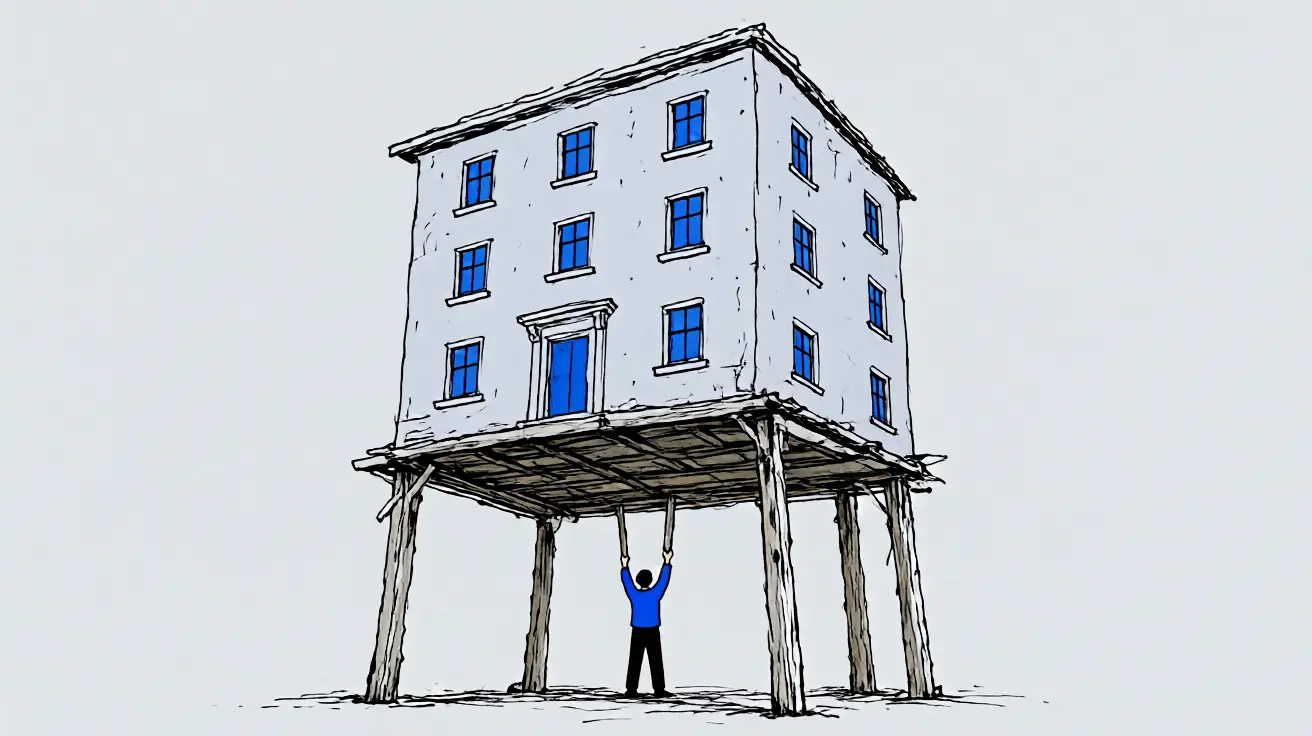
Every Moodle site in the world runs on PHP. So do WordPress, Drupal, Magento and, depending on whose numbers you use, up to 70% of all websites. The organisation that pays people to keep PHP itself working has one full-time employee.
That is not a guess. It is what Elizabeth Barron, the PHP Foundation’s executive director, told Reuters on 24 October 2026, three days after the php2shell bugs forced governments, banks and Moodle hosts to take sites offline: “We have one full-time staff member (that’s me) and 14 mostly part-time contractors.” And: “it is clear that PHP is incredibly under-funded.”1
Who actually maintains PHP?
PHP is maintained by a mix of volunteers, people whose employers let them work on it, and developers paid by the PHP Foundation. The foundation was set up in November 2021 by JetBrains and a group of PHP companies, after one of PHP’s most important core developers moved to other work and it became clear nobody was paid to replace him.
In 2025, according to its annual report, the foundation had eight volunteer directors, an executive director supported by JetBrains, and 11 contract developers. Those developers authored 42% of all commits to php-src that year and reviewed 1,685 pull requests from the community.2 The foundation’s own site counts 2,929 commits and 662 merged pull requests in 2025.3
So “one employee” undersells the team. But nearly half of the work on the language goes through a group of contractors funded by donations, and nobody has a permanent job doing it.
Where does the money come from?
Donations and grants. The 2025 numbers from the foundation’s public Open Collective records:2
| 2025 | USD |
|---|---|
| Donations | 730,534 |
| Fees | 85,343 |
| Received after fees | 645,191 |
| Spent | 784,376 |
| Spent beyond what came in | 139,185 |
Its estimated annual budget is now around $973,000.4 For comparison, that is roughly what a mid-sized company spends on five or six senior developers in the US. It funds the core of the language behind a large share of the web.
The biggest backers listed on the foundation’s site are JetBrains, Automattic (WordPress.com), the German government’s Sovereign Tech Agency and the Alpha-Omega project, followed by GoDaddy and team.blue, then a long list of PHP companies such as Symfony, Craft CMS, TYPO3, Private Packagist and Sentry.3
Moodle appears on the foundation’s site too, on its advisory board. It is not among the platinum, gold or silver sponsors listed there.3
Why does a Moodle site owner care?
Because the work the foundation pays for is the work that protects your site.
- Security fixes. php2shell was found, fixed and released for four PHP versions in coordination with the people who had to ship it. That needs maintainers who know the code. The foundation’s contractors are a large part of that group.
- The release cycle Moodle plans around. Moodle’s PHP requirements follow PHP’s support dates: 8.1 is out, 8.2 ends on 31 December 2026, and Moodle 5.2 and 5.3 already need 8.3. A thinner PHP team means slower fixes and, eventually, shorter support.
- More work, same people. Barron said proposed changes to PHP have nearly doubled in a year, partly because of AI-assisted coding, while “the number of contributors hasn’t doubled.”1 AI tools are also finding bugs faster. Someone has to review all of it.
Is PHP in trouble?
Not in the way the headlines suggest. The language is healthy, releases ship on time, PHP 8.6 is scheduled for 19 November, and the foundation has been in better shape every year since 2021. What it shows is how thin the layer is under software that institutions treat as permanent. Universities can pay six or seven figures a year for an LMS, and the language under it runs on donations.
The fix is boring: more companies that make money from PHP should pay for it. If your organisation runs Moodle at scale, a recurring donation to the PHP Foundation is cheap insurance, and it can be done through Open Collective or GitHub Sponsors in an afternoon.
What can you do on your own site today?
- Run a supported PHP version. Check Site administration, Server, Environment. If it says 8.1, plan the move to 8.3 this month. More in outdated PHP under Moodle.
- Know who patches PHP on your server, and how fast. What the big hosts did during php2shell is a good benchmark.
- Keep your custom plugins current. The usual reason a site can’t move to a new PHP version is old custom code. That is fixable, and it is the work we do.
Sources
-
Reuters interview, as reported by Slashdot: PHP Foundation “under-funded” with one full-time staff member, director says, 24 October 2026. ↑ ↑
-
Xenospectrum, PHP Foundation has just one full-time employee as funding gap and security fixes strain the project, citing the foundation’s 2025 annual report and Open Collective records. ↑ ↑
-
The PHP Foundation, thephp.foundation, checked 2 November 2026. ↑ ↑ ↑
-
Technology.org, PHP Foundation runs on one full-time employee after critical flaws hit, 26 October 2026. ↑
Need a Moodle plugin built or rescued?
Tell the scoping assistant what you need. You get a fixed price and a timeline in a few minutes, and an engineer reviews it within one business day.
Get a fixed quote